100% Rust & Corrosion Immunity
GFRP composite contains zero ferrous metals. Because it cannot oxidize, it completely prevents internal concrete tensile cracking, rust expansion spalling, and costly structural rehabilitation.
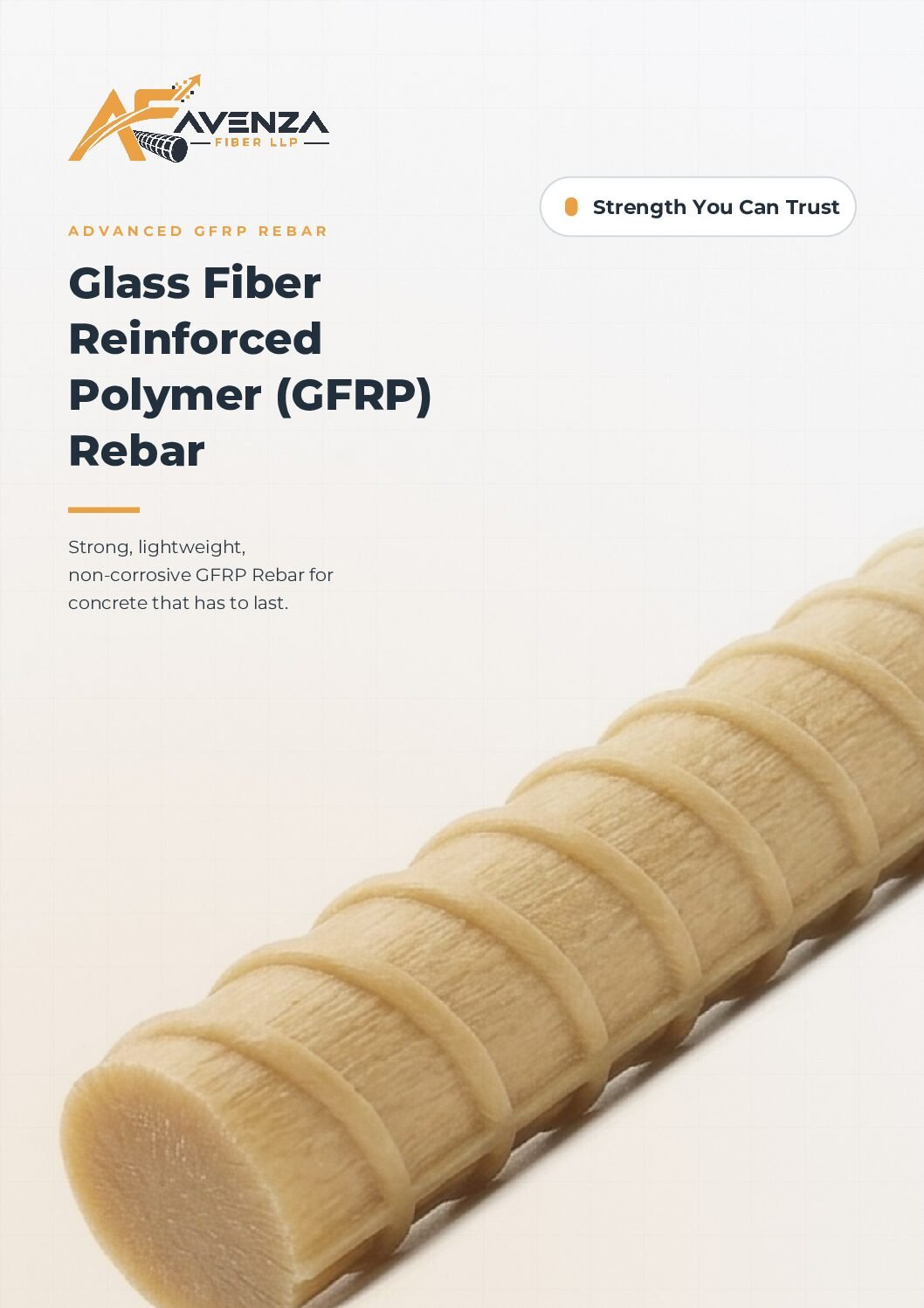
Glass Fiber Reinforced Polymer Rebar — The Rust-Free Alternative to Steel
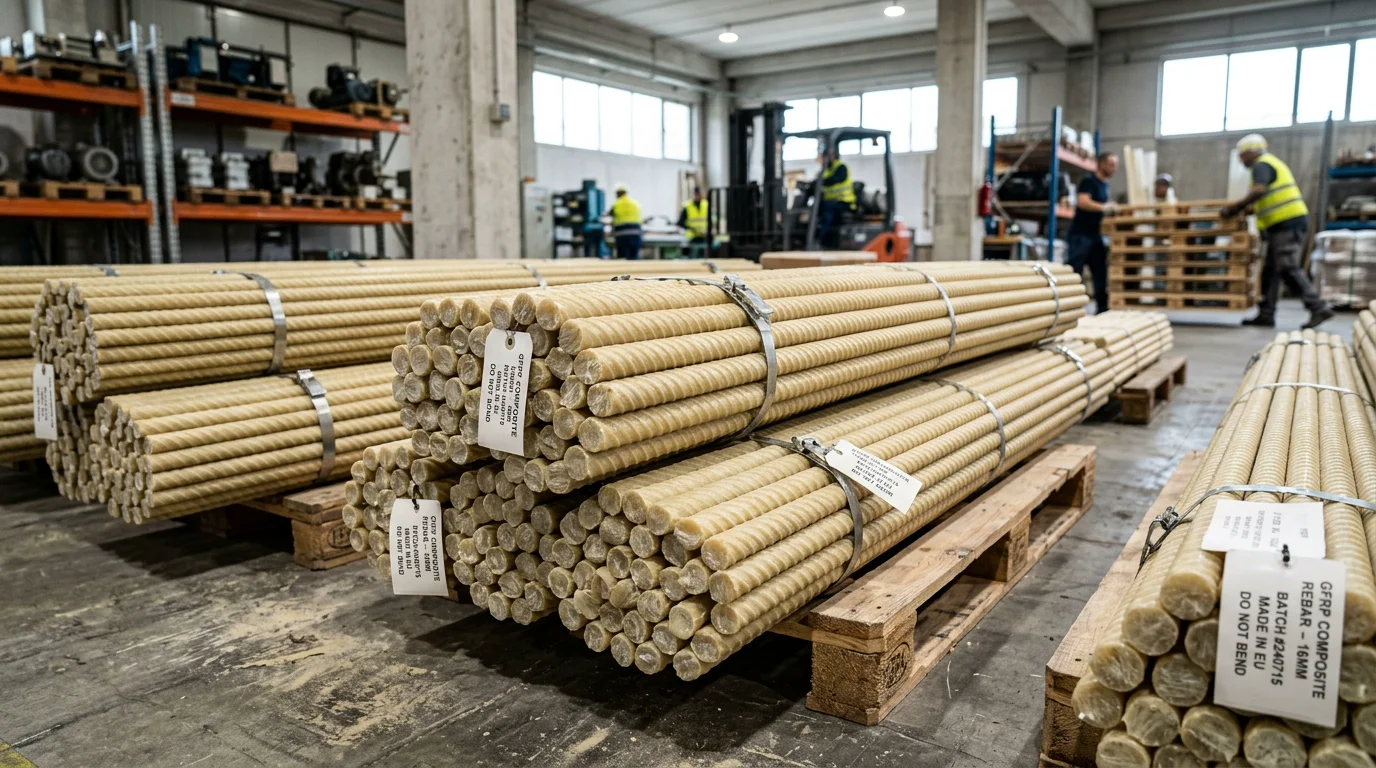
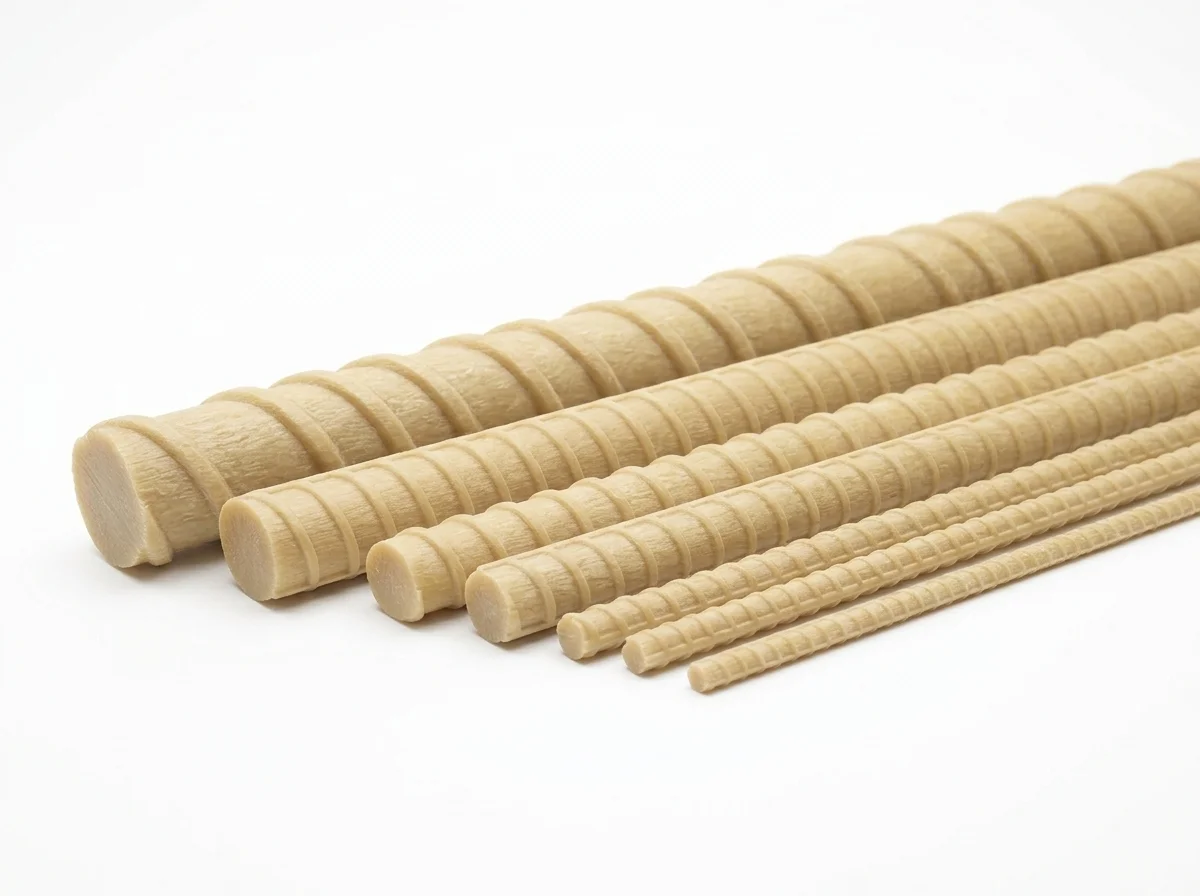
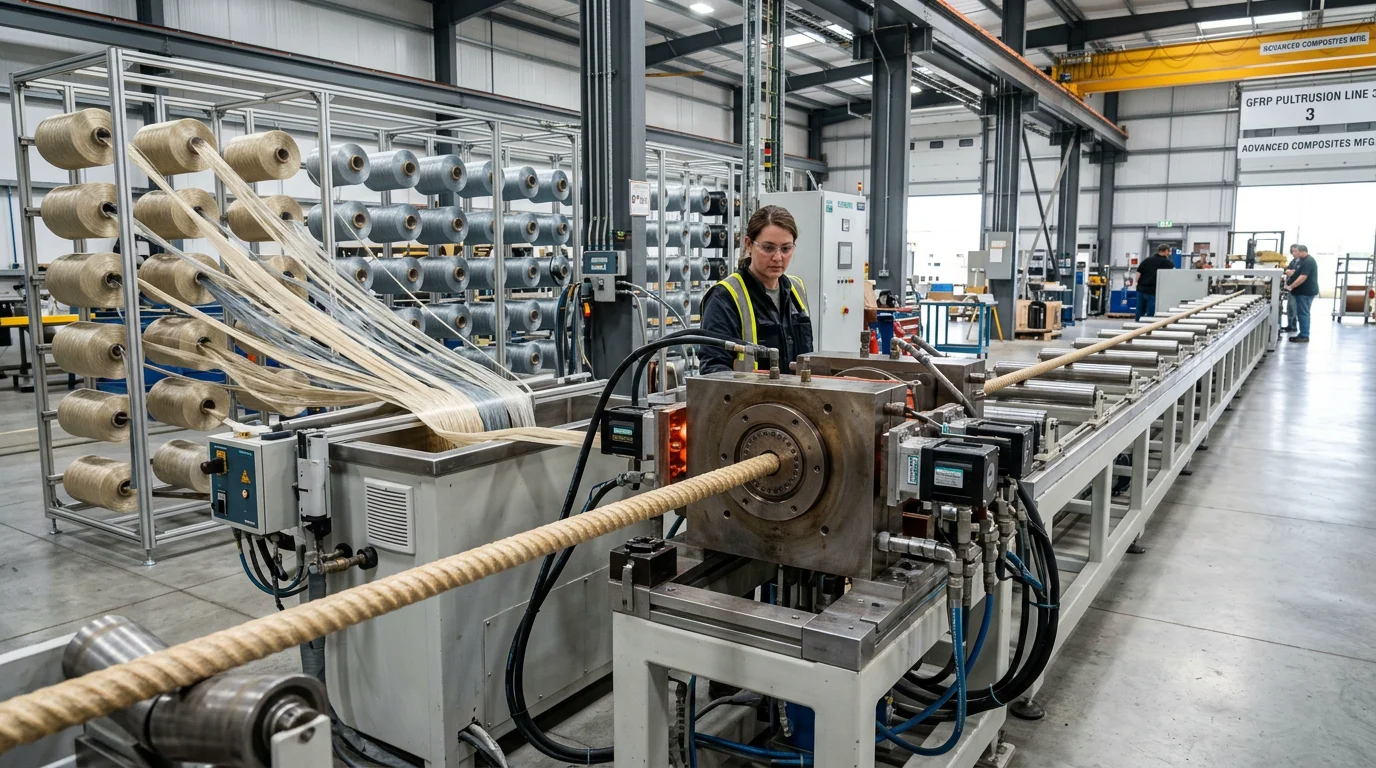
GFRP Rebar is a high-performance non-metallic composite reinforcement for concrete construction. Manufactured by embedding continuous high-strength glass fibers in a thermoset polymer resin matrix, it delivers tensile strength above 1000 MPa at 25% the weight of steel with 100% corrosion immunity.
Unlike steel, GFRP does not rust. Its non-conductive nature also makes it useful where electrical conductivity or electromagnetic properties need to be considered.
Over 1000 MPa guaranteed tensile strength, providing robust structural safety margins.
No rusting, and no cracking or spalling of surrounding concrete caused by iron oxide expansion.
About 25% of the weight of steel, minimizing logistics freight costs and physical worker fatigue.
Electrically non-conductive, with very low thermal conductivity and zero magnetic interference.
Long service potential in moisture, chloride, and chemical exposure when properly designed.
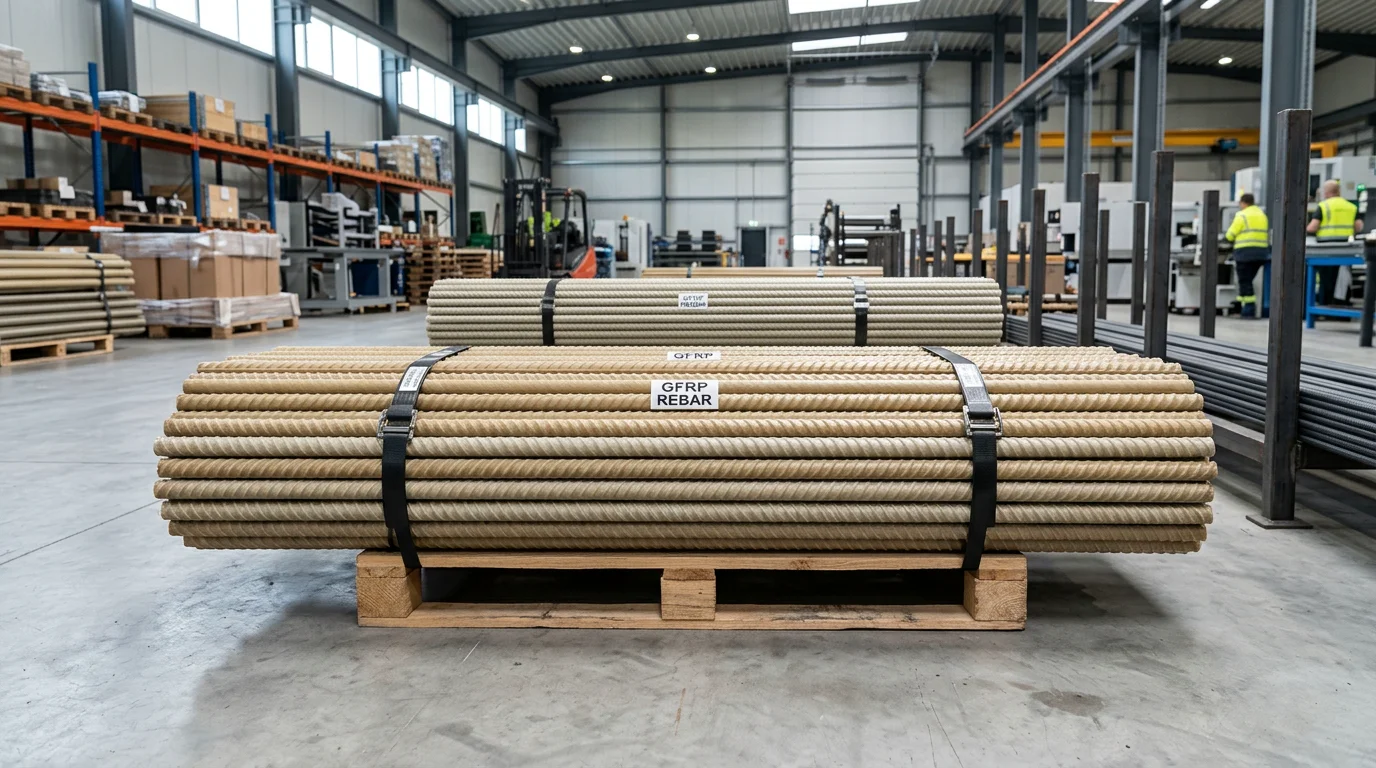
Simple to cut with standard blades, carry in bundles, and rapidly tie on site.
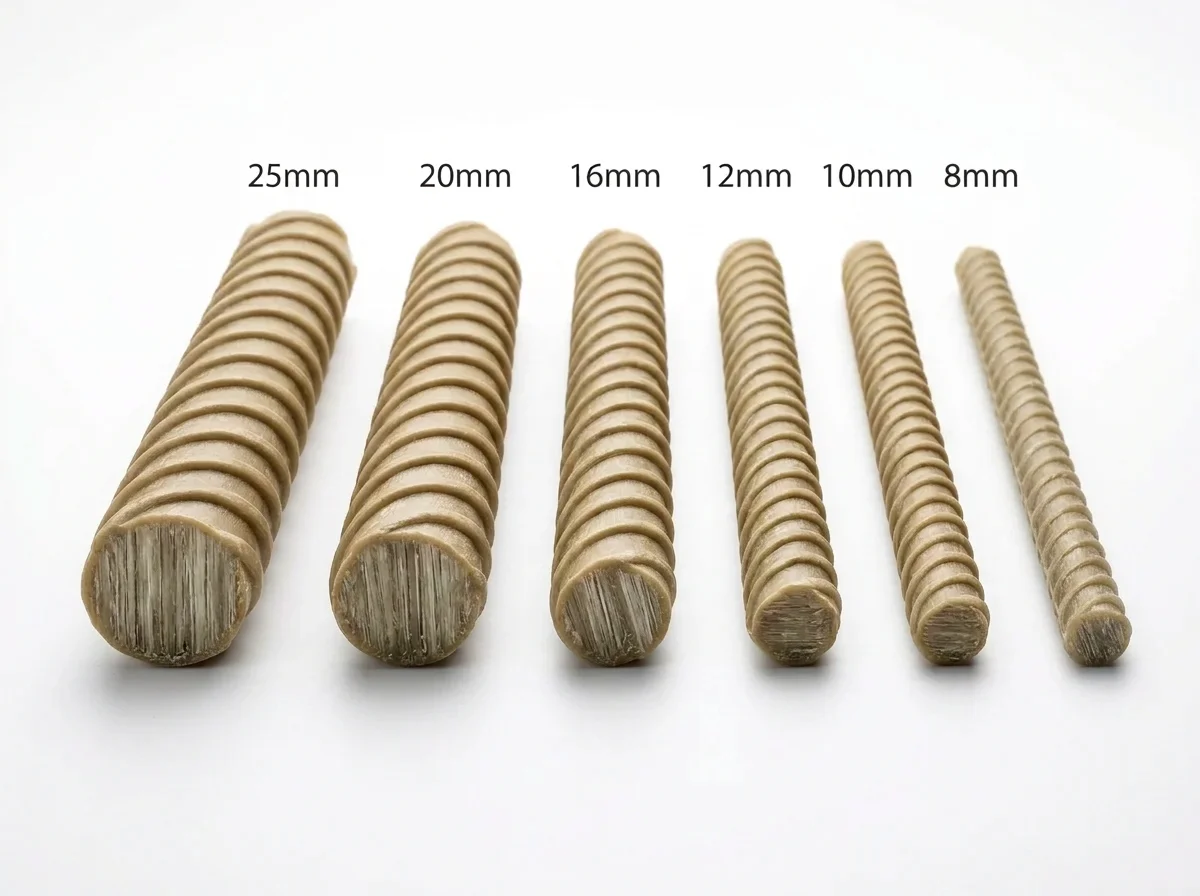
Seven standard bar diameters manufactured to exact pultrusion standards (IS 18256:2023 & ASTM D7957).
12 mm Nominal Diameter
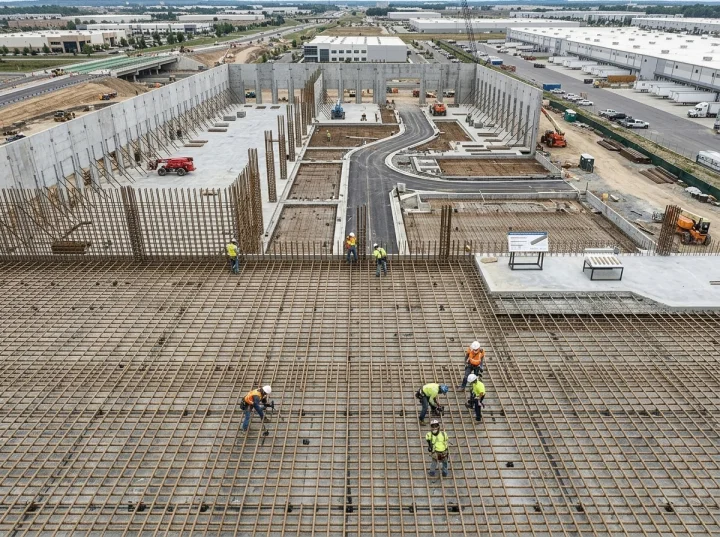
Ideal for Highways, base slabs, bridge approach slabs, box culverts
| Diameter | Unit Weight | Steel Weight (Equivalent) | Tensile Strength | Weight Savings |
|---|---|---|---|---|
| 6 mm | 0.065 kg/m | 0.222 kg/m | > 1000 MPa | 70.7% lighter |
| 8 mm | 0.116 kg/m | 0.395 kg/m | > 1000 MPa | 70.6% lighter |
| 10 mm | 0.175 kg/m | 0.617 kg/m | > 1000 MPa | 71.6% lighter |
| 12 mm | 0.250 kg/m | 0.888 kg/m | > 1000 MPa | 71.8% lighter |
| 16 mm | 0.450 kg/m | 1.580 kg/m | > 1000 MPa | 71.5% lighter |
| 20 mm | 0.685 kg/m | 2.470 kg/m | > 1000 MPa | 72.3% lighter |
| 25 mm | 1.070 kg/m | 3.850 kg/m | > 1000 MPa | 72.2% lighter |
*Need a specific size, length or quantity? Contact us for your requirement. Availability is confirmed at the time of enquiry.
Direct physical and mechanical property comparison for structural consultants, project engineers, and contractors.
| Property | Avenza GFRP Rebar | Steel Rebar |
|---|---|---|
| Tensile Strength | > 1000 MPa | 500 MPa |
| Weight | Approx. 25% of steel | 100% |
| Corrosion Resistance | Excellent (non-corrosive) | Susceptible to corrosion in aggressive exposure |
| Electrical Conductivity | Non-conductive | Conductive |
| Thermal Conductivity | Very low | High |
| Shear Strength | 120 MPa | 170 MPa |
| Bond Strength | 14 N/mm² | 14 N/mm² |
| Density | Approx. 1.9 t/m³ | Approx. 7.8 t/m³ |
*Typical values. Please refer to the current Avenza product datasheet and test reports for project use.
GFRP and steel do not behave identically under load. GFRP is an elastic-brittle composite, not a ductile material like steel, so reinforcement ratios, serviceability, development and splice lengths, fire considerations and detailing must be designed specifically for GFRP rather than swapped one-for-one with steel.
Final selection and detailing should be based on project-specific engineering requirements and applicable design provisions. Our team is happy to share product information and technical data for engineer review.
Six foundational engineering and lifecycle economic advantages proven across heavy infrastructure, coastal marine defense, and modern concrete construction.
GFRP composite contains zero ferrous metals. Because it cannot oxidize, it completely prevents internal concrete tensile cracking, rust expansion spalling, and costly structural rehabilitation.
Exceeds double the yield strength of traditional Fe500 steel reinforcement. Longitudinal high-grade glass fibers deliver immense tensile resistance for heavy structural loads.
At roughly 25% the density of steel, site crew can carry multiple bars by hand without crane reliance. Speeds up installation schedules by up to 40% and cuts freight shipping expense.
Eliminates recurring cathodic protection systems, epoxy maintenance, waterproof membranes, and premature structural slab replacements across multi-decade operational horizons.
Engineered specifically for coastal sea walls, chemical processing floors, sewage treatment clarifiers, marine jetties, and high-salinity groundwater sub-structures.
100% electrically non-conductive and transparent to radio frequencies and magnetic fields. Imperative for hospital MRI suites, airport radar stations, and high-voltage substations.
Steel has been the default for over a century, but its main weakness is corrosion. When steel rusts inside concrete, the rust occupies more volume than the original steel and can crack and spall the concrete from within.
Water, de-icing salts and changing weather lead steel to corrode, contributing to cracking and recurrent pothole repairs. GFRP does not rust, making it a strong option for slabs and pavements where corrosion is a concern.
Foundations sit in constant contact with soil moisture and groundwater. Steel depends on cover, concrete quality and detailing for protection, and hidden corrosion is costly to fix. GFRP offers a non-corrosive option for base slabs.
Pools stay in close contact with water, and some environments add sanitizing chemicals. Because GFRP does not rust, it can be considered for properly designed pool structures where corrosion resistance is a priority.
Water-retaining structures need durable reinforcement and careful control of cracking. GFRP's non-corrosive nature makes it a potential solution for suitable tanks, subject to structural design and detailing.
Bridge decks and components face repeated moisture and chloride exposure, and repairs are expensive and disruptive. GFRP can be considered for selected bridge applications where corrosion resistance is a key design consideration.
Aggressive acid fumes, alkaline washdowns, and chemical leaks cause rapid degradation in carbon steel reinforcement. Non-metallic GFRP bars resist acidic environments without sacrificial anodes.